Mistral Large 4 is downloadable. Who can actually use it?
The October 29 weight release adds a self-hosting route, but the practical choice depends on infrastructure, the license and the task you need done.

 The 30-second bite
- Mistral released downloadable Large 4 weights on October 29, beyond the earlier API preview.
- Hosted use, internal self-hosting and selling model access are different paths with different costs and responsibilities.
- The published license has a separate commercial-agreement condition for Model-as-a-Service use, with defined exceptions.
- Artificial Analysis provides an independent index result, not a guarantee for any one reader's task.
A download changes control, not the size of the job
Mistral released the weights of an improved Mistral Large 4 on October 29, following its October public preview. That means an organization can obtain the model checkpoint instead of depending entirely on Mistral to run it. For a reader who just wants to try a difficult writing or coding task, however, downloading a model and using a hosted service are different decisions. The new files make self-deployment possible; they do not turn a very large model into a one-click laptop app.
The official model card describes a roughly one-trillion-parameter mixture-of-experts system. Only some parts are active for each token, but the complete checkpoint still has to be stored and served. Its published vLLM example uses tensor parallel size eight. That is an example configuration, not a minimum hardware finding by LLMBites. Quantized versions and other serving methods can change the engineering choice. The practical point is narrower: public weights transfer more operating responsibility to the person who chooses to host them.
Three routes, three different questions
The simplest route is to use a hosted option. Mistral lists Studio, its API and Vibe Code, along with other hosted endpoints. You send a task to a service that runs the model. This can be a sensible first comparison when your question is whether Large 4 helps with a real job; it does not require buying or operating servers. Check the actual account, region and product terms before building a workflow around a route, because the announcement is not a guarantee that every interface is available to every person.
A second route is to download the weights and deploy them for an internal workload. That offers more control over the serving environment, customization and data flow, but it also means planning infrastructure, security, monitoring and ongoing costs. A third route is to make a hosted model service available to other customers. That route raises a separate license question. Treating all three as simply 'open' hides the difference between trying an API, operating a model inside a company and selling access to model inference.
Read the service clause before selling access
Mistral calls the terms the Mistral Ecosystem Open-Weight License, a modified MIT license. The published text allows people to use, change and distribute the model, while requiring the license notice in copies or substantial portions. Its commercial boundary is specific: a licensee or affiliate operating a Model-as-a-Service business needs a separate commercial agreement with Mistral before commercial use of the model or derivatives. The text defines that service around giving third parties meaningful control over inference or post-training inputs, parameters or training data.
The same text excludes certain embedded end-user features and mere relaying of requests from that definition, and exempts internal use and use through Mistral's official products from the separate-agreement clause. Those words matter more than a loose label such as 'free for business.' They do not settle every possible product design. A team planning to expose an endpoint should read the license itself and obtain qualified advice for its own facts; LLMBites is describing the source, not giving legal clearance.
A price example is not a hosting quote
Mistral lists $0.70 per million input tokens and $2.10 per million output tokens for its API as checked on November 2. On those rates, a deliberately simple example with one million uncached input tokens and 100,000 output tokens would be $0.91: $0.70 for input plus $0.21 for output. This is arithmetic under stated assumptions, not a task we ran, an invoice or a forecast for your work. Caching, other providers, tool calls and retries can move the amount.
That example helps compare the hosted route with the less visible bill for self-hosting. A self-run checkpoint avoids a per-token invoice from Mistral for that deployment, but it still needs suitable compute, storage, people and maintenance. The useful comparison is cost per completed, acceptable job, including corrections and operations, rather than a token rate in isolation. A team should estimate this against its own workload before assuming downloadable weights are cheaper.
The independent score answers a narrower question
Artificial Analysis, a separate evaluator, reports a score of 26 for Large 4 at its High setting on Intelligence Index v5. It also reports an average API cost of $2.06 per task in that index. The index combines nine evaluations, including knowledge work, coding and science tasks. These are useful outside measurements, but they do not prove that Large 4 will produce a good answer for your own document, codebase or language. Nor does the evaluator's task cost predict the price of your single request.
For a fair trial, choose a few jobs you already know how to judge. Keep the input and success criteria the same across models, then compare the finished result, correction time and total spend. If you are weighing internal deployment, add the infrastructure and governance work. These are suggested evaluation steps, not tests LLMBites performed. The weight release expands options; the best route still depends on a real task and the terms under which you will use it.
Why this matters
A downloadable model can give organizations more control over where and how AI runs, but only when they can operate it within the license and their own infrastructure. Separating those choices keeps an open-weight headline from becoming an unusable purchasing decision.
This is source-based reporting, not hands-on testing, a hardware benchmark or legal advice. The official serving recipe is illustrative, access can vary by service, and benchmark scores cover a defined task suite rather than every real workload.
Sources & reporting
- 01Mistral Large 4 (Le Chonk) is now open weightMistral AI · Oct 29, 2026
- 02Mistral Large 4 - Le Chonk model cardMistral AI on Hugging Face · Checked Nov 2, 2026
- 03Mistral Ecosystem Open-Weight LicenseMistral AI on Hugging Face · Checked Nov 2, 2026
- 04Mistral Large 4 (High) Intelligence, Performance & Price AnalysisArtificial Analysis · Checked Nov 2, 2026
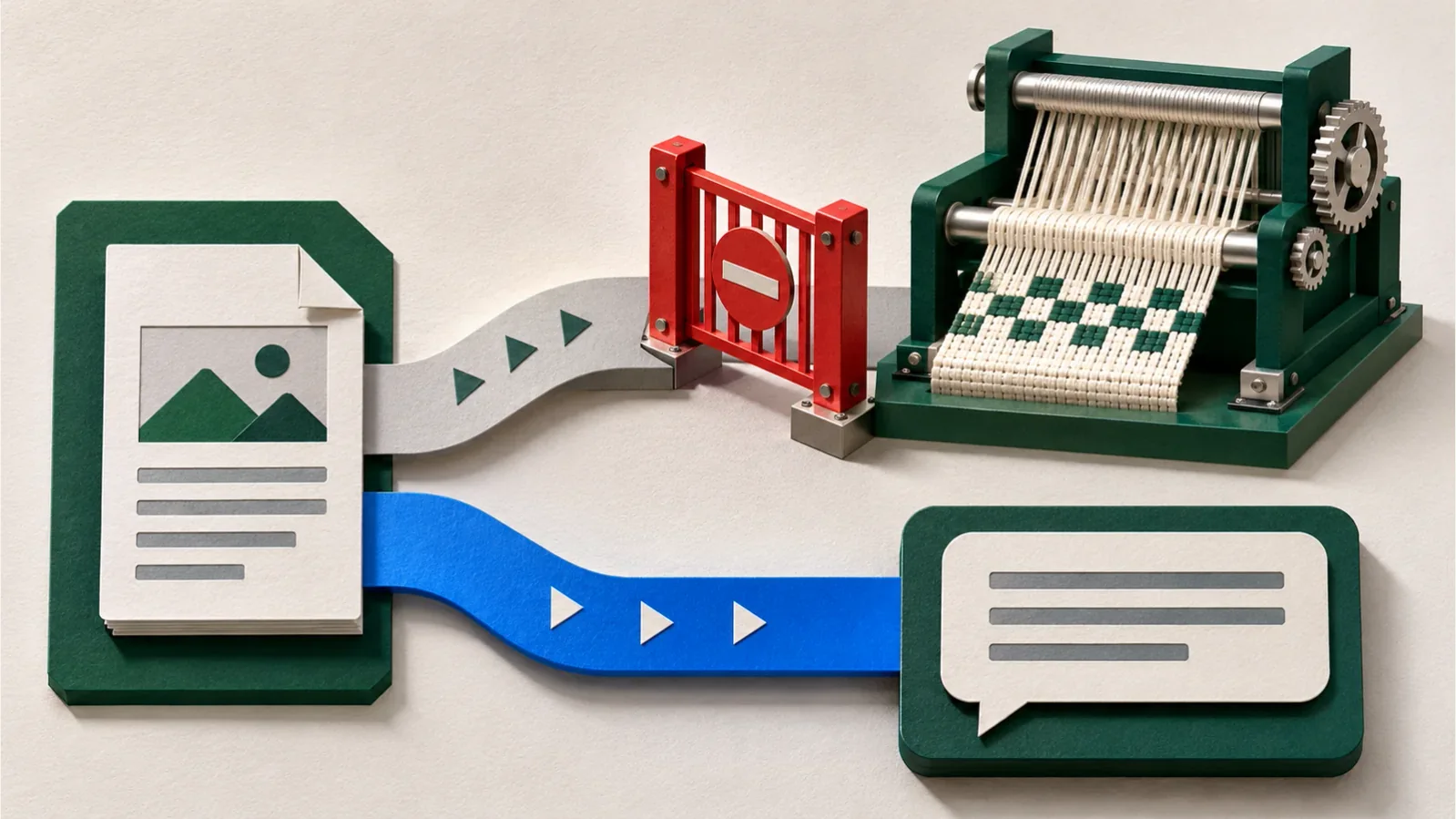
AI-assisted research and drafting. Sources were opened in full on November 2, 2026: Mistral's release, official model card and license, and Artificial Analysis's separately originated model evaluation. The three-route framework and arithmetic example are our analysis. No model was downloaded, run or independently benchmarked. The cover is an AI-generated conceptual illustration, not a product screen. Automated editorial and visual checks were performed by the writing agent; this article did not receive pre-publication human or independent editorial review.
Spot a mistake? Request a correction.