NYT Cooking can adapt a recipe with AI. The changed version is not editor-tested.
The October 23 beta helps Cooking subscribers tailor an existing recipe, but the result is a separate, untested version. Here is the useful boundary to understand before following it.
 The 30-second bite
- NYT Cooking announced AI-powered recipe customization on October 23; October 28 reporting discussed its rollout and reader reaction.
- The Times says Cooking subscribers can use the beta in its iOS app to adapt an existing recipe.
- An AI-modified version is separate from the original and, according to NYT, has not been cooked or editor-tested.
- The original-version toggle and source details help readers inspect a change, but do not certify its result.
A useful shortcut with a different status
The New York Times introduced its AI-powered Cooking recipe-customization beta on October 23. Reporting on October 28 brought the rollout and reader response into sharper view. According to the Times, the feature is available to Cooking subscribers in its iOS app, with a broader release planned but not dated. It is meant for the ordinary kitchen problem of having a recipe in front of you and needing to change something about it.
The crucial condition is easy to miss: a customized version is not another editor-tested Times recipe. The publisher says those generated versions have not been cooked, tested, edited or checked by its Cooking team. That distinction matters more than whether the alteration looks polished on a phone. The original and its AI-assisted derivative have different evidence behind them.
What the tool is designed to change
NYT's help page describes a chat on a recipe page that can propose ingredient swaps, adjust a recipe for the equipment on hand or change the number of servings. The user can refine the result in the chat and open a separate version of the recipe. The publisher also says a request that strays too far from the original may lead the tool to suggest a different recipe instead.
Consider a hypothetical weeknight cook who has a different herb in the cupboard. The useful question is not simply whether the tool can replace a word in an ingredient list. A change might also affect timing, texture or other steps. That is a reason to compare the entire altered version with the original, not a claim that we tried this substitution or that any particular swap will work.
Sources: [1]
The source list is a clue, not a guarantee
The Times says its customization system looks first at the recipe itself, then its ingredient-substitution guide, then user comments, and finally applies AI based on editorial principles when those sources do not cover the request. It says users can open a Sources dropdown for more about how a version was produced. That is a more inspectable starting point than an unexplained answer, but it remains the company's account of the system's behavior.
A practical reading order follows from that distinction. Start with any guidance already attached to the original recipe. Then look at the source information offered for the changed version and ask which parts are drawn from tested editorial material, community experience or the system's own inference. The last category should not inherit the original recipe's editorial testing merely because it appears beside it.
Sources: [1]
Compare before treating it as the recipe
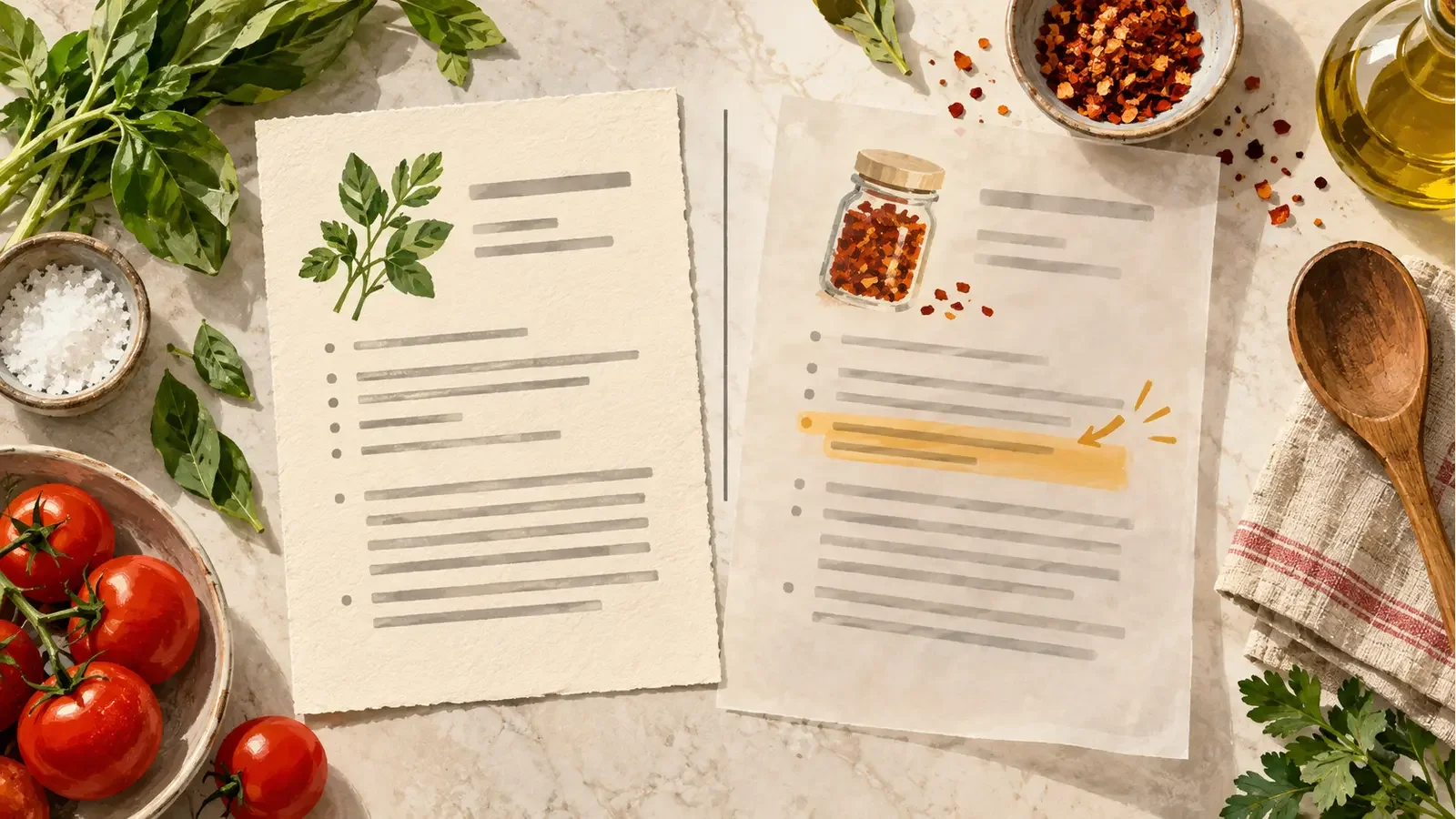
NYT's instructions describe an Original/Your Version toggle and a history of customized versions. Those controls give readers a way to see what changed and return to the published recipe. They are also a way to avoid a common category mistake: assuming the modified copy has the same review history as the underlying article. We have not used the beta ourselves, so this is a reading of the documented controls rather than a usability test.
For a low-stakes change, the altered version may be a convenient suggestion to evaluate. For a change whose consequences matter, the safer editorial conclusion is narrower: this article cannot establish that a generated recipe is reliable. It does not supply cooking instructions, nutritional claims or allergy substitutions. The publisher's own warning that the outputs can contain mistakes is the appropriate limit to carry forward.
Sources: [1]
The debate is about trust as well as convenience
Nieman Lab's October 28 report documents criticism from some Times readers who value human-developed recipes, alongside favorable comments from people who see practical value in adaptation. Those comments show a real editorial tension, but they are not a representative survey of subscribers or a blind test of the tool. The question for an individual cook is whether a faster suggestion is worth taking on the work of checking the change.
There is a second, quieter consideration. The NYT help page says the company collects customization chats and usage data, and warns against entering sensitive personal information that users would not want stored or used in the process. The feature can be useful without making a private health or dietary history part of a prompt. Its availability and interface may evolve during beta; the current documentation should be checked again when that matters.
Why this matters
A familiar, human-edited recipe can now produce a convenient AI-customized derivative. Readers need to know which part received editorial testing, what access is actually announced, and what they must still judge for themselves.
We did not access the beta, cook a customized recipe or test its safety. Access and system behavior are attributed to NYT's documentation and statements. Nieman Lab reports reader responses, not an independent performance evaluation. The October 23 NYT announcement page itself was inaccessible to our reader.
Sources & reporting
- 01Customize NYT Cooking RecipesThe New York Times Help Center · Checked Oct 30, 2026
- 02The New York Times is adding more AI features to its Cooking app, and users aren't thrilledNieman Journalism Lab · Oct 28, 2026
AI-assisted research and drafting. This article was researched, drafted, illustrated and checked with AI assistance and automated self-review, without pre-publication human or independent review. We read the NYT Help Center page and Nieman Lab's October 28 report in full. The original October 23 announcement could not be opened. Hypothetical kitchen questions and the comparison framework are our own analysis; no recipe, app session or generated result was tested. Automated editorial and visual checks were performed by the writing agent; this article did not receive pre-publication human or independent editorial review.
Spot a mistake? Request a correction.