Snowflake's new AI context layer needs human-approved definitions
Business Ontology aims to give agents a shared meaning for disputed metrics. It is in private preview, and approved definitions are not a reliability guarantee.

 The 30-second bite
- Snowflake announced Business Ontology on November 3 to give AI agents steward-approved meanings for business terms.
- The feature is in private preview, with public preview promised soon but no firm date.
- Approved meaning and actual calculation are separate; a human still decides which definitions become official.
- Independent reporting found analyst interest in the design, alongside a call for production-scale proof.
A shared answer starts with an agreed meaning
Ask an AI agent for net revenue and its answer depends on which definition it uses. Finance may mean recognized revenue after refunds, while Sales may mean bookings at signing. Snowflake's Business Ontology, announced November 3, is designed to give agents a governed place to find approved business meanings. But it is in private preview: a team cannot assume the new feature is already available in its Snowflake account, or that a shared definition guarantees a correct answer.
This is not a new consumer chatbot. It is a context layer for organizations building AI agents on business data. Snowflake says the layer records concepts, their owners, relevant policies and links to the underlying assets. The practical promise is less room for an agent to silently choose whichever column sounds plausible. The practical dependency is a person or team willing to decide which meaning is official in the first place.
One phrase can have two legitimate definitions
Snowflake's engineering explanation does not say every disagreement should be flattened into one universal number. Its example names Finance.Net Revenue and Sales.Net Revenue as separate concepts. That matters because a sales forecast and an accounting close may each use a legitimate definition of revenue, but answer different questions. A useful agent should identify the domain before it presents a figure, and a useful organization should record who owns the definition and when it applies.
Consider a manager asking, 'Did net revenue rise last quarter?' Before treating an AI response as a decision input, the team could specify whether the request concerns recognized revenue, bookings or another measure, then compare the answer to the approved calculation. This is our illustrative review step, not a workflow LLMBites ran or an outcome Snowflake has demonstrated for every customer. It turns a vague confidence claim into a question a team can actually check.
Sources: [2]
A definition is not the calculation
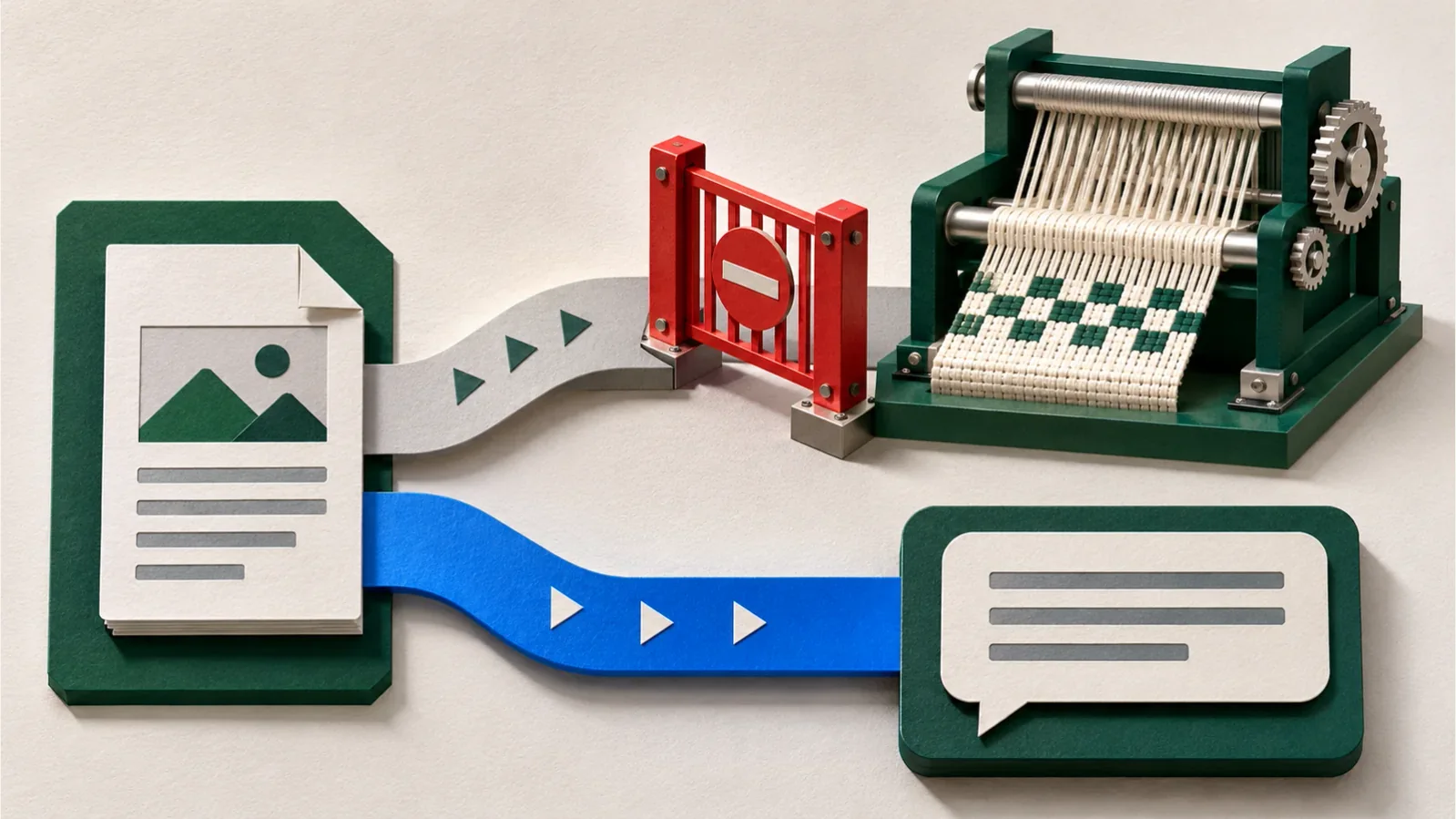
The components have different jobs. Snowflake describes Business Ontology as the place for approved meaning and accountability, while semantic views handle governed calculations such as joins, filters and aggregations. A representation connects a concept to an asset that implements it; that reference does not itself calculate the metric. Snowflake explicitly says a formula stored in the ontology is not executed there. Confusing these layers could make an AI answer look more verified than it is.
For a team evaluating the preview, one sensible test is to trace a result backward: which approved concept did the agent select, which semantic view computed the number, and which source tables fed that view? Then check whether the answer names the right time period and exclusions. The ontology could make that chain clearer, but a correct definition cannot repair incorrect source data, a stale calculation or a question that never specified the intended business context. That last point is our inference from the design, not a measured defect in the product.
Sources: [2]
Automation still leads to a human approval point
Snowflake says teams can draft concepts by hand, import an existing glossary or propose them from semantic views and inferred context. Imported and machine-suggested entries are drafts until a steward reviews them. That is an important limit on the word 'automatic': a system can help discover candidate meanings, but it cannot decide that two similarly named metrics truly mean the same thing just because their tables or labels resemble each other.
A practical first use, once the feature is enabled, would be to choose one disputed metric rather than move an entire company glossary at once. Assign an owner, record the approved definition and its calculation, then ask two existing agents the same ambiguous question before and after they use the governed concept. Review the cited assets and any remaining disagreements. These are proposed acceptance checks, not hands-on testing by LLMBites, and success on one metric would not establish reliability across all workflows.
Sources: [2]
Access and proof are separate questions
Snowflake's engineering post states that Business Ontology is in private preview and that public preview is coming soon. It provides no firm public-preview date. The broader November 3 launch also includes controls at different release stages, so a single 'Snowflake AI is available' label would obscure what a customer can use now. A prospective buyer or builder should ask Snowflake which precise component is enabled for the account and region, rather than infer access from the event headline.
Informa TechTarget's separate reporting quotes analysts who see value in the shared-definition approach, while warning that the products still need evidence at production scale. Their assessment is useful context, not an independent benchmark showing the ontology works or fails. Snowflake's examples explain how the feature is intended to work; they do not establish how often real agents choose the correct definition, how quickly a team can maintain one, or how well conflicting answers disappear in practice. Those remain evaluation questions.
Why this matters
An AI answer about a business metric can sound precise while using the wrong definition. Snowflake's design offers a way to make that choice inspectable, but access, ownership of definitions and real-world reliability remain separate decisions.
This is source-based reporting on a private-preview feature, not a hands-on evaluation. Snowflake has not stated a firm public-preview date, and the independent source offers analyst assessment rather than a measured performance result.
Sources & reporting
- 01Snowflake Helps Enterprises Deploy AI Agents with Trusted Business Context and Built-In ControlsSnowflake · Checked Nov 4, 2026
- 02Meaning Before Metrics: How We Built a Governed Business Ontology for AI AgentsSnowflake · Checked Nov 4, 2026
- 03Latest Snowflake blast targets trust in AI and efficient developmentInforma TechTarget · Checked Nov 4, 2026
AI-assisted research and drafting. We read Snowflake's November 3 announcement and engineering account and Informa TechTarget's separately reported analysis on November 4. The two Snowflake pages share one origin. LLMBites did not access the preview, test an agent, interview anyone or reproduce any performance claim. AI assisted the research, drafting and illustration. The writing agent's checks and any automated publication review are not human or independent editorial approval. Automated editorial and visual checks were performed by the writing agent; this article did not receive pre-publication human or independent editorial review.
Spot a mistake? Request a correction.